
Search
Abdominal pain is a common reason for children to attend the Emergency Department (ED) with acute appendicitis being the most common surgical cause. Various clinical prediction scores (CPSs) have been developed to assist in determining the risk of appendicitis; however, CPSs have been inadequately validated in children and haphazardly adopted in Australia and New Zealand EDs.
The nasal epithelium is the primary point of contact for inhaled respiratory viruses such as rhinovirus, respiratory syncytial virus, influenza, and coronavirus, among others. In order to establish infection, these viruses must engage their respective receptors located on host epithelial cells and begin replication.
Septo-optic dysplasia (SOD) is a major cause of congenital hypopituitarism and is known to be associated with overweight and obesity in up to 44% of children. Given the role of the hypothalamus in hormonal regulation, we sought to assess the association of resting energy expenditure (REE), appetite and physical activity with SOD.
Given the significance of gut microbiota in autism spectrum disorder (ASD), we aimed to assess the quality of systematic reviews (SRs) of studies assessing gut microbiota and effects of probiotic supplementation in children with ASD. PubMed, EMBASE, PsycINFO, Medline, and Cochrane databases were searched from inception to November 2024.
Dr Katherine Alexander Landwehr Larcombe BSc(Hons) BScEnv (Hons) PhD Senior Research Officer Honorary Research Fellow Katherine.landwehr@
About 2 per cent of children are estimated to have an intellectual disability. The cause of the condition is unknown in at least 50 per cent of cases.
A severe neurodevelopmental disorder mostly affecting girls.
The science that interprets the way nutrients and other substances in food affect maintenance, growth, reproduction, health and disease.
Rheumatic heart disease (RHD) is the most important cause of acquired cardiovascular disease in children and young adults. Virtually non-existent in most of Australia, it still predominantly affects Aboriginal communities.
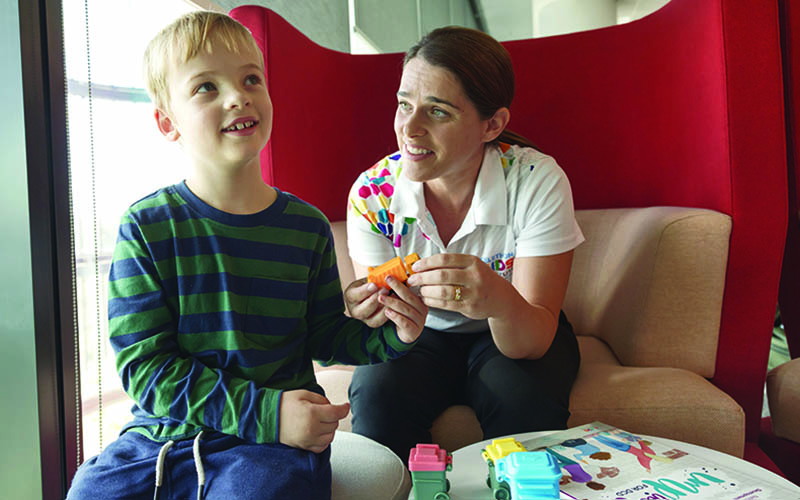
Meet Toby - he has developmental coordination disorder (DCD), a neurodevelopmental condition that causes delays and impairments in fine and gross motor skills.