
Search
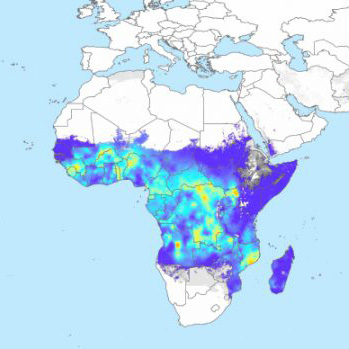
The Vector Atlas aims to update and create vector species maps and spatial products that improve disease prediction, mitigation and preparedness.
A survey of 136 articles published in 2019 (sampled at random) was conducted to determine whether a statement about missing data was included.
Since the emergence of SARS-CoV-2 in 2019 through to mid-2021, much of the Australian population lived in a COVID-19-free environment. This followed the broadly successful implementation of a strong suppression strategy, including international border closures. With the availability of COVID-19 vaccines in early 2021, the national government sought to transition from a state of minimal incidence and strong suppression activities to one of high vaccine coverage and reduced restrictions but with still-manageable transmission.
Since its inception in 2005, the US President's Malaria Initiative (PMI) has played a major role in the reductions in malaria morbidity and mortality observed across Africa. With the status of PMI funding and operations currently uncertain, we aimed to quantify the impact that a fully functioning PMI would have on malaria cases and deaths in Africa during 2025.
Cases identified through mass testing represent only a fraction of infections, depending on the propensity of infected individuals to seek testing. Quantifying the variation in test-seeking behaviour through time or between population subgroups provides important information on testing uptake and supports epidemiological analyses of case data that may otherwise be biased.
Mild stroke affects more than half the stroke population, yet there is limited evidence characterizing cognition over time in this population, especially with predictive approaches applicable at the individual-level. We aimed to identify patterns of recovery and the best combination of demographic, clinical, and lifestyle factors predicting individual-level cognitive state at 3- and 12-months after mild stroke.
In the austral summer of 2021-2022, Australia experienced an unprecedented Japanese encephalitis virus (JEV) outbreak, with detections over 3000 km south of previous occurrences. Given the limited knowledge of JEV transmission ecology in Australia, we developed geospatial models of transmission risk to support the public health response. We created time-varying habitat suitability models for suspected mosquito vectors and ardeid hosts using month-scaled occurrence and covariate data from 2000-2023.
The availability of COVID-19 vaccines promised a reduction in the severity of disease and relief from the strict public health and social measures (PHSMs) imposed in many countries to limit spread and burden of COVID-19. We were asked to define vaccine coverage thresholds for Australia's transition to easing restrictions and reopening international borders.
Despite the large body of research on missing value distributions and imputation, there is comparatively little literature with a focus on how to make it easy to handle, explore, and impute missing values in data. This paper addresses this gap. The new methodology builds upon tidy data principles, with the goal of integrating missing value handling as a key part of data analysis workflows.
The Infectious Disease Ecology and Modelling team led by Professor Nick Golding, combines mathematical and statistical modelling, ecology, and public health to address malaria and other infectious and vector-borne diseases. The team uses modelling and maps to measure the risk posed by some of the world’s most important and neglected diseases – including malaria, Japanese Encephalitis and COVID-19 – and provide rapid modelling analyses to policy makers.