
Search

Children at risk of potentially life-threatening Strep A infections no longer have to wait five days for timely treatment, thanks to a The Kids Research Institute Australia study conducted in the remote Kimberley region of Western Australia.

When Katrina took her daughter Tenaya to the local emergency department for the fourth time, she was determined she wouldn’t be leaving without answers.
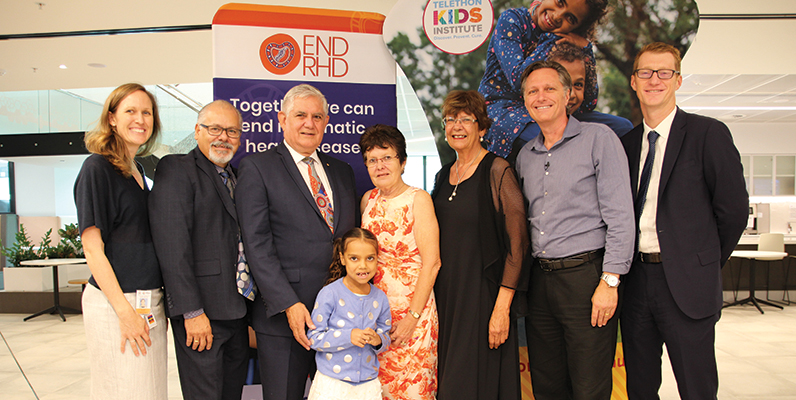
It's been a huge year for those working to eliminate rheumatic heart disease (RHD), with breakthroughs including $35M in funding to develop a Strep A vaccine.
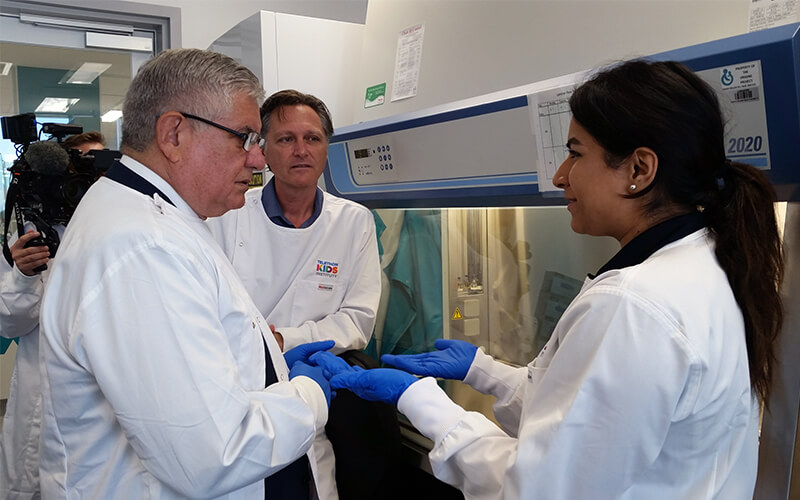
A vaccine to prevent rheumatic heart disease (RHD) and other life-threatening conditions caused by the common Strep A bacteria is a step closer thanks to funding announced by Minister for Indigenous Health, Hon Ken Wyatt AM, MP, in Perth today.

The Kimberley has the highest rates of rheumatic heart disease (RHD) in Western Australia – but through the establishment of a new community-led, research-backed project known as END RHD Communities, there’s hope this will change.

Over 100 researchers and health professionals from around Australia have united in Broome this week to address the major health battles facing people living in the tropical north of the country.

Leading paediatrician, infectious diseases specialist and Executive Director of The Kids Research Institute Australia, Professor Jonathan Carapetis, has been recognised for his significant contribution towards medical research with the award of Member of the Order of Australia (AM).
The World Health Organisation resolution for global action to tackle rheumatic heart disease (RHD) will have significant implications for Australia, which has some of the highest rates of the disease in the world.

In a WA first, researchers from The Kids Research Institute Australia have shown that Aboriginal babies are 22.5 times more likely to be treated for skin infections than non-Aboriginal babies.

Some of the nation’s leading medical researchers will converge on Darwin this week to step out a plan to wipe out rheumatic heart disease.