Search
Research
Containing Coronavirus Disease 19 (ConCorD-19)Chile has been hard hit by COVID-19, at times reporting around 6500 new cases a day, with many of these located in the capital Santiago.
Research
Targeting interventions to improve influenza control: a proof of principle geomapping studyChristopher Kefyalew Hannah Blyth Alene Moore MBBS (Hons) DCH FRACP FRCPA PhD BSc, MPH, PhD OAM BSc (Hons) GradDipClinEpi PhD Centre Head, Wesfarmers
Research
Respiratory syncytial virus in children: epidemiology and clinical impact post-COVID-19Respiratory syncytial virus (RSV) remains a leading cause of mortality and morbidity worldwide. RSV seasonality was disrupted by COVID-19-associated nonpharmaceutical interventions (NPIs). We review RSV seasonality, molecular epidemiology, clinical manifestations, and community awareness to inform future prevention strategies.
Research
Individual variation in vaccine immune response can produce bimodal distributions of protectionThe ability for vaccines to protect against infectious diseases varies among individuals, but computational models employed to inform policy typically do not account for this variation. Here we examine this issue: we implement a model of vaccine efficacy developed in the context of SARS-CoV-2 in order to evaluate the general implications of modelling correlates of protection on the individual level.
Research
COVID-19 vaccine coverage targets to inform reopening plans in a low incidence settingSince the emergence of SARS-CoV-2 in 2019 through to mid-2021, much of the Australian population lived in a COVID-19-free environment. This followed the broadly successful implementation of a strong suppression strategy, including international border closures. With the availability of COVID-19 vaccines in early 2021, the national government sought to transition from a state of minimal incidence and strong suppression activities to one of high vaccine coverage and reduced restrictions but with still-manageable transmission.
Research
Life in a time of COVID: retrospective examination of the association between physical activity and mental well-being in western Australians during and after lockdownThe aim of this study was to examine physical activity and sedentary behaviours during Western Australia's COVID-19 lockdown and their association with mental well-being.
Research
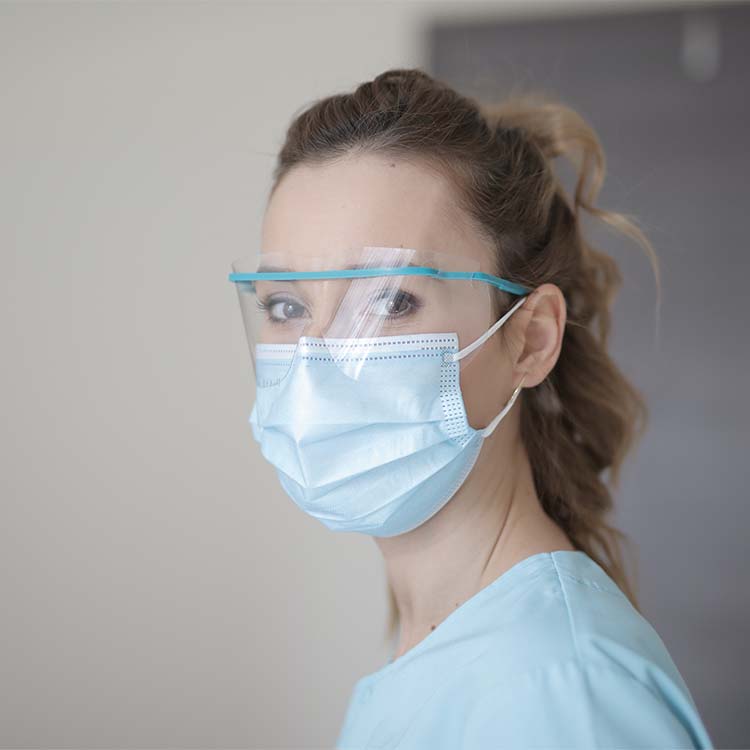
End-user acceptability of personal protective equipment disinfection for potential reuse: a survey of health-care workers in Aotearoa New ZealandThe COVID-19 pandemic has highlighted personal protective equipment (PPE) supply, distribution, and disposal issues worldwide. Calls to conserve PPE stocks and increase supply resulted in the rapid development of potential disinfection methods, with the possibility of improvements in medical waste reduction. However, how receptive health-care workers are to PPE reuse remains unknown. We aimed to examine the views of health-care workers who used PPE during the first COVID-19 wave in Aotearoa New Zealand, in relation to acceptability of PPE disinfection and reuse.
Research
Defining the pediatric response to SARS-CoV-2 variantsThe global population has been severely affected by the coronavirus disease 2019 (COVID-19) pandemic, however, with older age identified as a risk factor, children have been underprioritized. This article discusses the factors contributing to the less severe response observed in children following infection with severe acute respiratory syndrome coronavirus 2 (SARS-CoV-2), including, differing viral entry receptor expression and immune responses.
Research
Core protocol for the adaptive Platform Trial In COVID-19 Vaccine priming and BOOsting (PICOBOO)The need for coronavirus 2019 (COVID-19) vaccination in different age groups and populations is a subject of great uncertainty and an ongoing global debate. Critical knowledge gaps regarding COVID-19 vaccination include the duration of protection offered by different priming and booster vaccination regimens in different populations, including homologous or heterologous schedules.
Research
Modeling COVID-19 disease processes by remote elicitation of causal Bayesian networks from medical expertsCOVID-19 is a new multi-organ disease causing considerable worldwide morbidity and mortality. While many recognized pathophysiological mechanisms are involved, their exact causal relationships remain opaque. Better understanding is needed for predicting their progression, targeting therapeutic approaches, and improving patient outcomes. While many mathematical causal models describe COVID-19 epidemiology, none have described its pathophysiology.