
Search
Showing results for "A"
Event-free survival considers other adverse events in addition to mortality. It therefore provides a more complete understanding of the effectiveness and consequences of treatment than standard survival measures, but is rarely reported at the population level for childhood cancer.
The Toronto Paediatric Cancer Stage Guidelines are a compendium of staging systems developed to facilitate collection of consistent and comparable data on stage at diagnosis for childhood cancers by cancer registries.
The needs of Aboriginal stroke patients with acquired communication disorder should inform appropriate service design for speech pathology and rehabilitation
Developmental and epileptic encephalopathies (DEE) are rare, often monogenic neurodevelopmental conditions. Most affected individuals have refractory seizures. All have multiple severe impairments which can be as life-limiting as or more limiting than the seizures themselves. Mechanism- and gene-targeted therapies for these individually rare, genetic conditions hold hope for treatment, amelioration of disease expression, and even cure.
Existing clinical tools that measure non-seizure outcomes lack the range and granularity needed to capture skills in developmental and epileptic encephalopathy (DEE)-affected individuals who also fall in the severe to profound range of intellectual disability. This effectively excludes those with severe impairments from clinical trials, impeding the ability of sponsors to evaluate disease-modifying therapies.

A The Kids Research Institute Australia researcher who is part of an international research project working to understand how our genes keep us healthy has been awarded an Au
Helen Leonard MBChB MPH Principal Research Fellow +61 419 956 946 helen.leonard@thekids.org.au Principal Research Fellow Areas of research expertise
Type-2 diabetes is a systemic condition with rising global prevalence, disproportionately affecting Indigenous communities worldwide. Recent advances in epigenomics methods, particularly in DNA methylation detection, have enabled the discovery of associations between epigenetic changes and Type-2 diabetes. In this review, we summarise DNA methylation profiling methods, and discuss how these technologies can facilitate the discovery of epigenomic biomarkers for Type-2 diabetes.
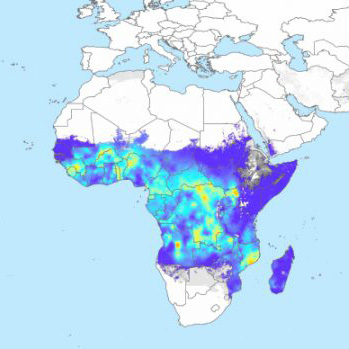
The Infectious Disease Ecology and Modelling team led by Professor Nick Golding, combines mathematical and statistical modelling, ecology, and public health to address malaria and other infectious and vector-borne diseases. The team uses modelling and maps to measure the risk posed by some of the world’s most important and neglected diseases – including malaria, Japanese Encephalitis and COVID-19 – and provide rapid modelling analyses to policy makers.
While bacille-calmette-guerin (BCG) vaccination is one of the recommended strategies for preventing tuberculosis, its coverage is low in several countries, including Ethiopia. This study investigated the spatial co-distribution and drivers of TB prevalence and low BCG coverage in Ethiopia.