
Search
Showing results for "A"
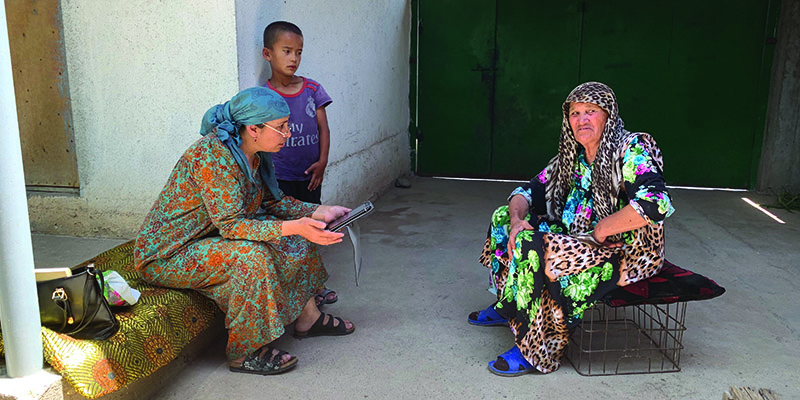
Fieldworkers learning how to collect eHCI data A fieldworker collects data for the eHCI in Tajikistan The rugged, landlocked Central Asian country of
Skin scar formation following Bacille Calmette-Guérin (BCG) or smallpox (Vaccinia) vaccination is an established marker of successful vaccination and 'vaccine take'. Potent pathogen-specific (tuberculosis; smallpox) and pathogen-agnostic (protection from diseases unrelated to the intentionally targeted pathogen) effects of BCG and smallpox vaccines hold significant translational potential.
Quantifying the extent to which previous infections and vaccinations confer protection against future infection or disease outcomes is critical to managing the transmission and consequences of infectious diseases. We present a general statistical model for predicting the strength of protection conferred by different immunising exposures (numbers, types, and strains of both vaccines and infections), against multiple outcomes of interest, whilst accounting for immune waning.
Physical literacy development in early childhood, viewed by many as the foundation for lifelong physical activity engagement, is significantly influenced by parents. Our aim was to explore parents' understanding of physical literacy and gain insight into their perspectives on physical literacy promotion.
Type 1 interferons (T1IFNs) are typically expressed in low concentrations under homeostatic conditions, but upon pathogenic insult or perturbation of the pathway, these critical immune signaling molecules can become either protectors from or drivers of pathology. While essential for initiating antiviral defense and modulating inflammation, dysregulation of T1IFN signaling can contribute to immunopathology, making it and its associated pathways prime targets for immune evasion and disruption by pathogens.
To evaluate the psychometric properties of the Quality of Life Inventory -Disability (QI-Disability) for individuals with Dravet syndrome (DS) or Lennox-Gastaut syndrome (LGS), two rare developmental and epileptic encephalopathy conditions.
Cancer cells are addicted to polyamines, polycations essential for cellular function. While dual targeting of cellular polyamine biosynthesis and polyamine uptake is under clinical investigation in solid cancers, preclinical and clinical studies into its potential in haematological malignancies are lacking. Here we investigated the preclinical efficacy of polyamine depletion in acute leukaemia.
Meta-analyses of randomized controlled trials have found that introducing eggs and peanuts earlier during infancy reduced egg and peanut allergy risk. Hence, infant feeding advice has dramatically changed from previous recommendations of avoidance to current recommendations of inclusion of common food allergens in infant diets.
Rheumatic heart disease (RHD) comprises heart-valve damage caused by acute rheumatic fever (ARF). The Australian Government Rheumatic Fever Strategy funds RHD Control Programs to support detection and management of ARF and RHD. We assessed epidemiological changes during the years of RHD Control Program operation.
The method outlined in this article is a customization of the whole exhaust exposure method generated by Mullins et al. (2016) using reprogrammed primary human airway epithelial cells as described by Martinovich et al. (2017). It has been used successfully to generate recently published data (Landwehr et al. 2021). The goal was to generate an exhaust exposure model where exhaust is collected from a modern engine, real-world exhaust concentrations are used and relevant tissues exposed to assess the effects of multiple biodiesel exposures.