
Search
Showing results for "A"
At the end of 2019 and into 2020, catastrophic fires in Australia consumed homes, lives, wildlife, and land. Just as the fires subsided, Australia, like the rest of the world, faced another emergency—the COVID-19 pandemic. It is instructive to reflect on lessons from the health disasters of the past year. Following publication of the Lancet Countdown on Health and Climate Change, the Medical Journal of Australia (MJA)–Lancet Australian Countdown was published in December, 2020. This annual report on health and climate change in Australia is in its third year and comprises the efforts of five Australian institutions, in collaboration with University College London, UK, facilitated by a partnership between The Lancet and the MJA.
Our findings suggest that the proportion of degranulated basophils can also be associated with recurrent exacerbations
Expiratory flow limitation is more prevalent in children born preterm with bronchopulmonary dysplasia and is associated with airway obstruction
Here we present an approach for the DNA methylation-based classification of central nervous system tumors across all groups and demonstrate its application.
We studied in a non-randomized follow-up trial the persistence of pneumococcal immunity in children, 3-5 years of age, in community controls of a similar age.
Chronic inflammation may expand sub-populations of T cells expressing CTLA-4 in COPD patients and therefore impair T-cell function
Mothers of children with autism without ID had increased risk of cancer, which may relate to common genetic pathways
Help us discover a way to expand protection for the next generation.
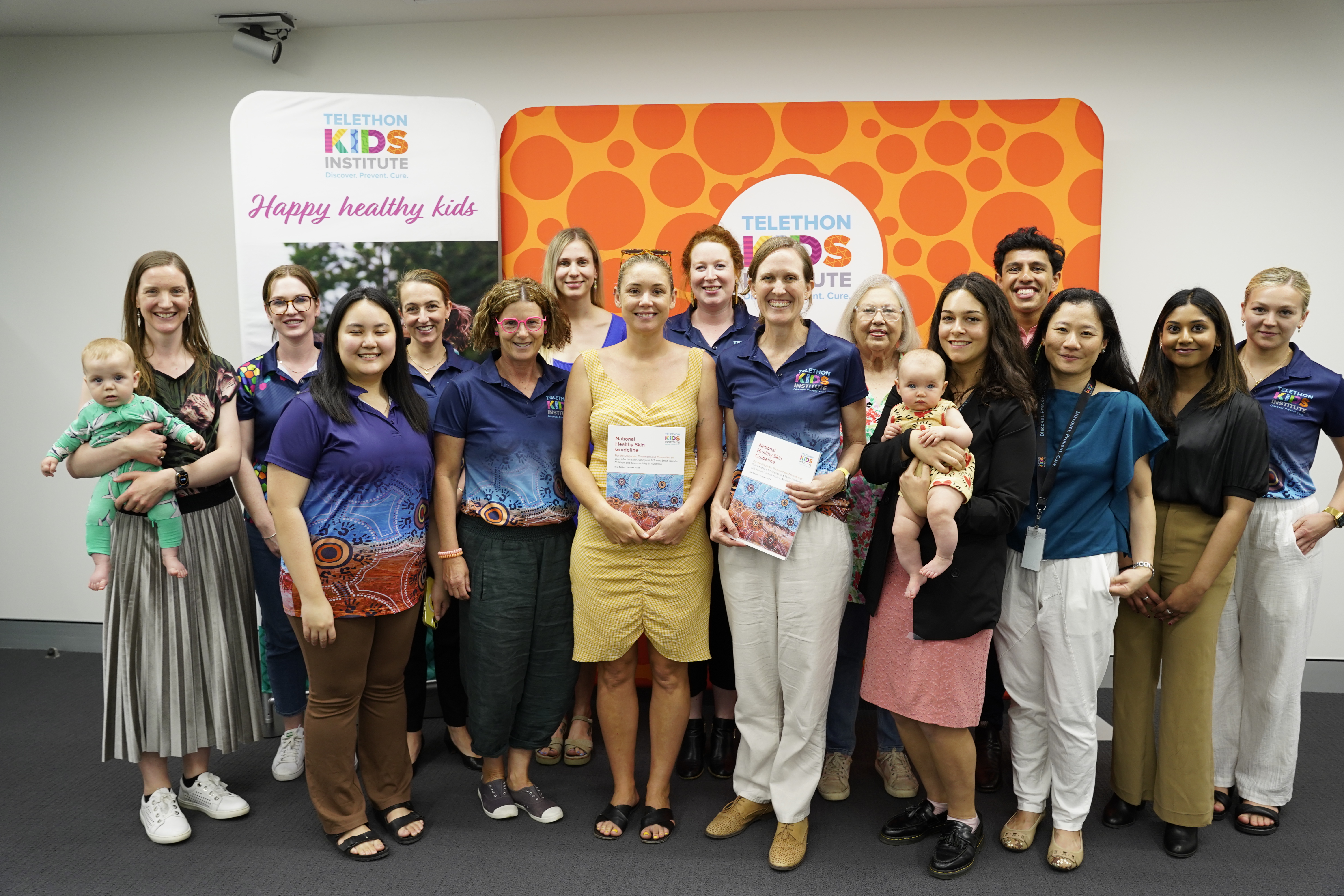
A new National Healthy Skin Guideline has been launched by The Kids Research Institute Australia, to help health care providers identify, diagnose and treat a range of skin conditions experienced by Aboriginal and Torres Strait Islander people in urban and remote areas.

Young Minds Matter is the second Australian Child and Adolescent Survey of Mental Health and Wellbeing.