
Search
Showing results for "A"
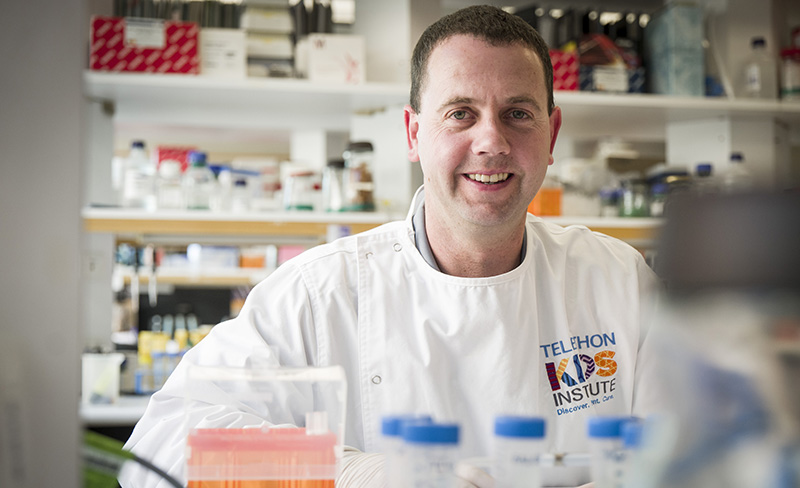
A team of Australian scientists including cancer researchers from The Kids Research Institute Australia have made a crucial breakthrough in understanding how the immune system puts cancer to sleep.

BHP has announced a $20 million commitment to Telethon over the next five years to fund a world-first research partnership with Aboriginal families in the Pilbara and Perth.
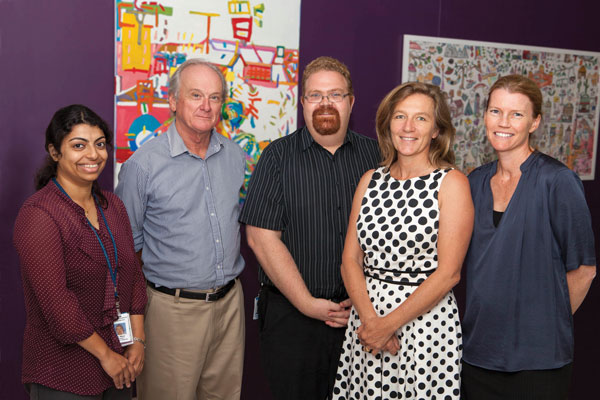
Researchers led by the team at the Children’s Diabetes Centre at The Kids have taken a key step to a fully automated closed-loop insulin delivery system.

Project D-Light aims to understand and harness the benefits of vitamin D and sunlight for Australian children while protecting them from excess UV.
A report outlining key steps to tackle a common and aggressive childhood brain tumor is gaining rapid momentum after attracting international attention.
The World Health Organization identifies a strong surveillance system for malaria and its mosquito vector as an essential pillar of the malaria elimination agenda. Anopheles salivary antibodies are emerging biomarkers of exposure to mosquito bites that potentially overcome sensitivity and logistical constraints of traditional entomological surveys.
Despite significant advances, outcomes for children with Down syndrome (DS, trisomy 21) who develop acute lymphoblastic leukemia remain poor. Reports of large DS-ALL cohorts have shown that children with DS have inferior event-free survival and overall survival compared to children without DS.
No validated oral health-related quality of life (OHRQOL) instrument currently exists for those with severe intellectual and developmental disabilities and who communicate non-verbally. This qualitative study aimed to explore the domains that were important to the oral health-related quality of life in individuals with Rett syndrome.
Adaptive clinical trials have designs that evolve over time because of changes to treatments or changes to the chance that participants will receive these treatments. These changes might introduce confounding that biases crude comparisons of the treatment arms and makes the results from standard reporting methods difficult to interpret for adaptive trials. To deal with this shortcoming, a reporting framework for adaptive trials was developed based on concurrently randomised cohort reporting.
To investigate epigenomic indices of diabetic kidney disease (DKD) susceptibility among high-risk populations with type 2 diabetes mellitus.