
Search
Showing results for "A"

A researcher's work from 20 years ago has helped to crack one of biology’s biggest mysteries.
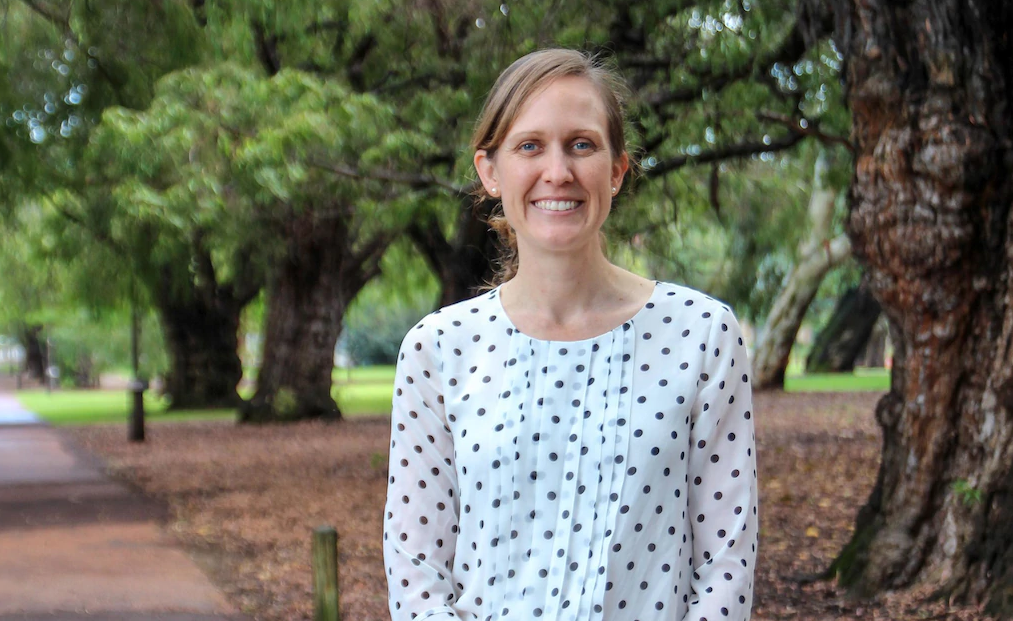
The Kids Research Institute Australia, Perth Children’s Hospital (PCH) and the Peter Doherty Institute for Infection and Immunity (Doherty Institute) will spearhead the paediatric arm of a world-first global platform trial designed to uncover treatments for Staphylococcus aureus bloodstream infection.
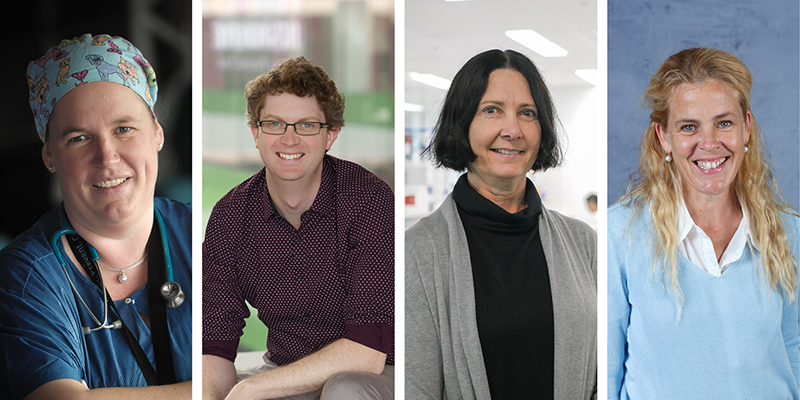
Research projects sharing in a $2.1 million funding boost will seek to translate research findings into changes that benefit patients and help the health system run more efficiently.

Nutrition is important during the COVID-19 pandemic because it can provide both physical and mental health benefits.
The lungs are one of the last organs in the body to develop as a baby grows. They're also one of the most important.
These summary measures can also be used to quantify the component of variation in epidemiology that is related to sociodemographic development.
This study questions the causal effect of short interpregnancy intervals on adverse birth outcomes and points to the possibility of unmeasured or...
This paper reports some of the findings from the Western Australian Influenza Vaccine Effectiveness Study, commenced in 2008, to evaluate a program providing...
Staphylococcus aureus bloodstream infection is traditionally treated with at least 2 weeks of intravenous antibiotics in adults, 3-7 days in children, and often longer for those with complicated disease. The current practice of treating S. aureus bacteremia with prolonged IV antibiotics (rather than oral antibiotics) is based on historical observational research and expert opinion. Prolonged IV antibiotic therapy has significant disadvantages for patients and healthcare systems, and there is growing interest in whether a switch to oral antibiotics following an initial period of IV therapy is a safe alternative for clinically stable patients.
No studies have yet examined high-resolution shifts in the spatial patterns of human movement in Australia throughout 2020 and 2021, a period coincident with the repeated enactment and removal of varied governmental restrictions aimed at reducing community transmission of SARS-CoV-2. We compared overlapping timeseries of COVID-19 pandemic-related restrictions, epidemiological data on cases and vaccination rates, and high-resolution human movement data to characterize population-level responses to the pandemic in Australian cities.