
Search
Showing results for "A"
We found no evidence of gender-specific effects for the outcomes of academic achievement, educational expectations or educational attainment in adulthood.
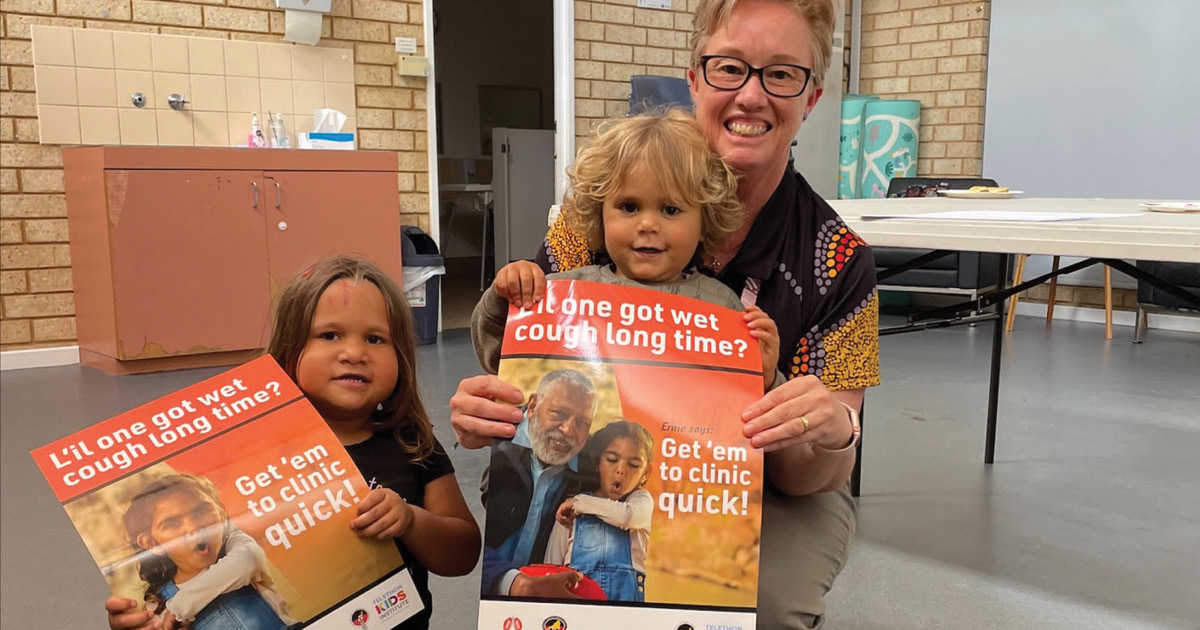
A program aimed at raising awareness of the dangers of a chronic wet cough in Aboriginal children has been extended to 14 remote and regional towns in Western Australia - thanks to a partnership between The Kids Research Institute Australia and Cystic Fibrosis WA.
Anthony Belinda Ingrid Kicic Hales Laing BSc (Hons) PhD BSc (Hons) PhD BSc PhD Rothwell Family Fellow; Head, Airway Epithelial Research Senior
Early in the coronavirus disease 2019 (COVID-19) pandemic, evidence emerged that individuals with chronic and immunocompromising conditions faced increased risk of severe infection, including death. The Australian Government and public health authorities prioritised these citizens' access to vaccines, including them in phase 1b of the rollout from 22 March 2021.
Gram-negative bloodstream infections (GNBSIs) more commonly occur in children with comorbidities and are increasingly associated with antimicrobial resistance. There are few large studies of GNBSIs in children that relate the clinical presentation, pathogen characteristics, and outcomes.
The Kids Research Institute welcomes WA's $11M RSV immunisation program, offering free Nirsevimab to infants, aiming to reduce winter hospitalisations.
Annual estimates of seasonal influenza vaccine effectiveness can guide global risk communication and vaccination strategies to mitigate influenza-associated illness. We aimed to evaluate vaccine effectiveness in countries using the 2023 southern hemisphere influenza vaccine formulation.
Pneumococcal conjugate vaccine (PCV) prevents pneumococcal disease and pneumonia, but indirect effects are poorly understood in low-coverage, high-burden settings like Papua New Guinea (PNG). PNG introduced 13-valent PCV (PCV13) in 2014. We aimed to assess direct and indirect effectiveness of PCV13 against vaccine-type pneumococcal carriage among children with pneumonia or suspected meningitis in PNG

The Centre is currently involved in an international effort to develop revolutionary closed- loop 'artificial pancreas' technology. It is also leading a multi-centre Australian trial of these portable devices at home in young people with diabetes.
Immunomodulatory proteins in human milk (HM) can shape infant immune development. However, strategies to modulate their levels are currently unknown. This study investigated whether maternal prebiotic supplementation alters the levels of immunomodulatory proteins in HM.