
Search
Showing results for "A"

One of the biggest problems facing young people with neuromuscular disorders is the risk of breathing problems caused by muscle weakness during sleep.
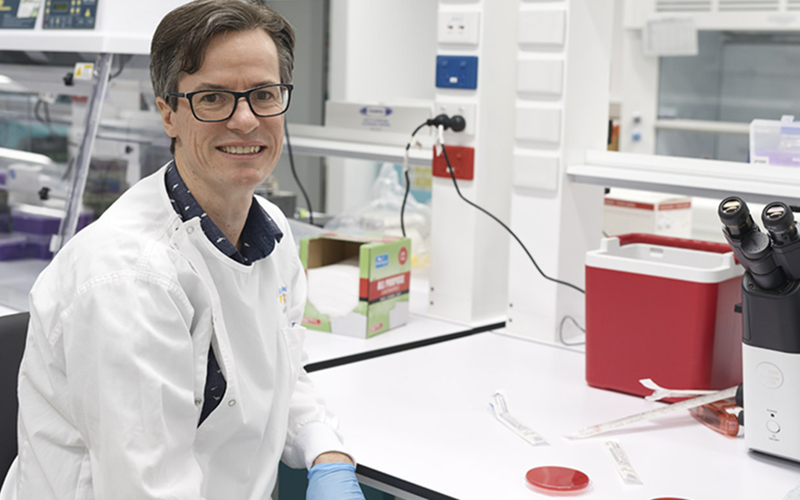
A rapid test to detect antibiotic-resistant skin infections in Aboriginal children could be a step closer, thanks to support from the FHRIF.
Glenn Martyn Pearson Symons BA (Education) PhD Candidate B.A. (Hons) PhD. Director of First Nations Strategy and Leadership; Head, First Nations
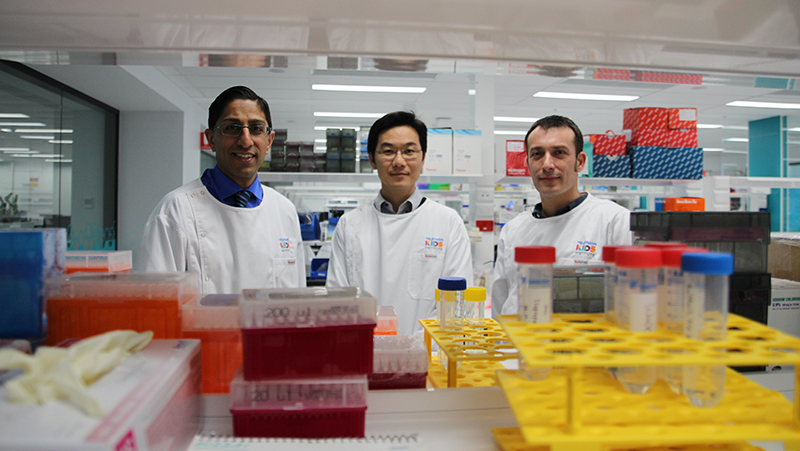
Kids born with Down syndrome are at high risk of an array of health problems. One of the lesser-known complications is their increased risk of childhood leukaemia.
Acute rheumatic fever (ARF) and rheumatic heart disease (RHD) occur at very high rates among Aboriginal and Torres Strait Islander people.
Human cutaneous leishmaniasis, a neglected tropical disease caused by Leishmania braziliensis, presents treatment challenges due to varying therapeutic responses. Current therapies often encounter limited efficacy and treatment failure, demanding a deeper understanding of immunopathogenesis and predictive markers.
Acute rheumatic fever (ARF) is an abnormal immune reaction following Streptococcus pyogenes (Strep A) infection of the throat, and likely the skin. Primary prevention is the prompt and appropriate antibiotic treatment of Strep A infection, and it can reduce the risk of developing ARF and subsequent rheumatic heart disease.

We have developed best-practice suicide prevention guidelines for health professionals and community service providers to help them create safe spaces for LGBTQA+ young people.
At the end of a 60-day course of narrowband UVB phototherapy, administered to individuals with early multiple sclerosis, there were changes in the relative proportions of circulating B-cell subsets. This study investigated phototherapy-associated changes to cytokine responses of B cells when exposed to a TLR7 ligand.
Children with Down syndrome (constitutive trisomy 21) that develop acute lymphoblastic leukemia (DS-ALL) have a 3-fold increased likelihood of treatment-related mortality coupled with a higher cumulative incidence of relapse, compared with other children with B-cell acute lymphoblastic leukemia (B-ALL).