
Search
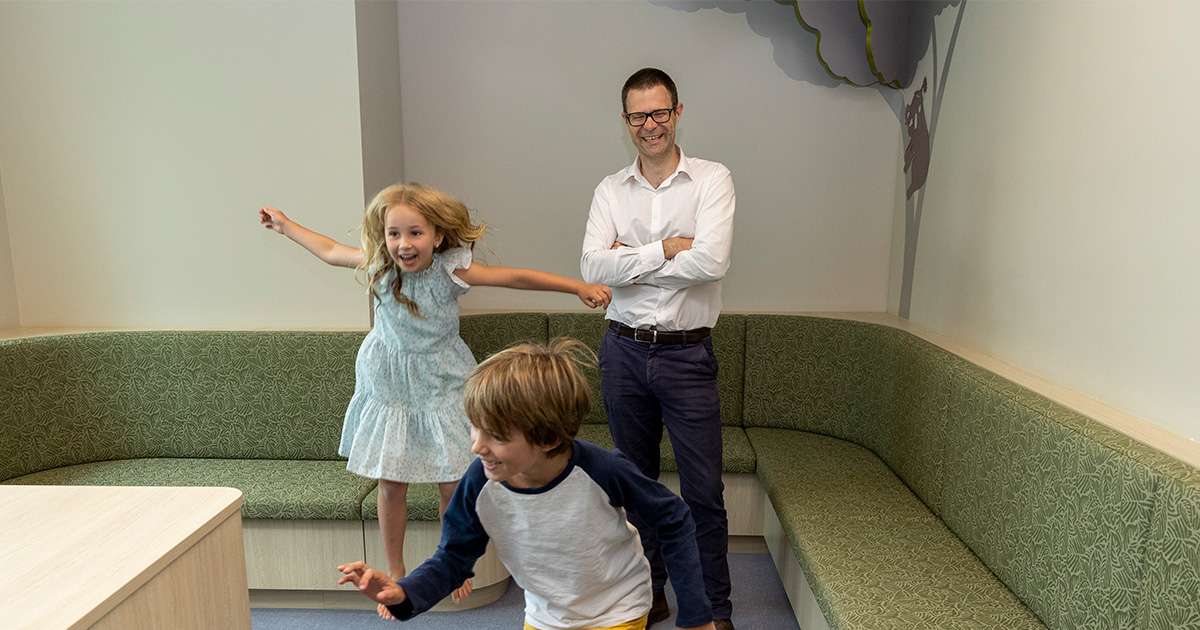
The Kids Research Institute Australia's Professor Andrew Whitehouse and Sarah Pillar share four things families can do to support their child while waiting to receive an ADHD or autism diagnostic assessment.
A comparison of parents’ experiences of getting a diagnosis for their child with autism, attention deficit hyperactivity disorder (ADHD) and both diagnoses can inform our understanding of common and unique themes across these neurodevelopmental conditions.
Social media allows users to connect with others’ experiences and points of view, with TikTok being the fastest-growing platform worldwide. Highly viewed videos related to neurodiversity on TikTok have an increasing role in understanding and acceptance of neurodivergent individuals.
Sibling profiles, including sibling status (only-child or sibling) and sibling characteristics (sibling size, birth order, and sex), can impact on lived experiences and social interactions, and operate as protective or risk factors for a wide range of health and well-being indicators and outcomes. Using population-based data linkage to disability-specific databases, sibling profiles were compared between families of children with and without neurodevelopmental conditions.
With advances in perinatal care, we have achieved major reductions in mortality in premature and critically ill infants, but they still remain at increased risk of neurodevelopmental disability. In this context, recent advances in neuroimaging are perceived as an addition of significant value to current clinical developmental screening programs.
To examine the lived experiences of young people successfully managing life with ADHD and investigate the applicability of adult models of Recovery to these individuals.
Eating disorders (EDs) are increasingly recognised among neurodivergent and transgender and gender diverse (TGD) individuals, yet most assessment and treatment models remain grounded in cisnormative and neuronormative assumptions and frameworks. Sensory processing, spanning interoception and exteroception, has been proposed as a potential factor that may help explain observed associations between neurodivergent traits, gender incongruence, and EDs.
Parents of children with attention-deficit/hyperactivity disorder (ADHD) often make disclosure decisions about their child's ADHD on their behalf. While disclosure can facilitate access to support, it risks stigma. Despite ADHD being one of the most common neurodevelopmental conditions, little is known about parent's experiences in relating information about their child's ADHD diagnosis or medication use, to others.
Dysfunctional glutamatergic neurotransmission has been implicated in the underlying pathogenesis of Attention Deficit Hyperactivity Disorder (ADHD). The psychostimulant methylphenidate (MPH), which is used as a first line treatment for ADHD, has been shown to have both acute and chronic effects on prefrontal cortex glutamatergic afferents. Animal studies have also identified an effect of MPH and glutamate in prefrontal areas. Despite this there are ongoing questions as to the extent and direction of this effect, as well as its impact on other neurobiological processes.
This study explored the lived experience of university students with attention-deficit hyperactivity disorder (ADHD) and identified factors that help or hinder their capacity for self-compassion in higher education. Fourteen university students with ADHD aged 18–25 participated in individual semi-structured interviews exploring experiences of self-compassion in academic contexts.