
Search
Social motivation is posited as a key factor in the expression of the autism phenotype. However, lack of precision in both conceptualization and measurement has impeded a thorough understanding of its diverse presentation and associated outcomes. This study addresses this gap by identifying subgroups of autism characterized by deficits in distinct facets of social motivation, relative to normative benchmarks.
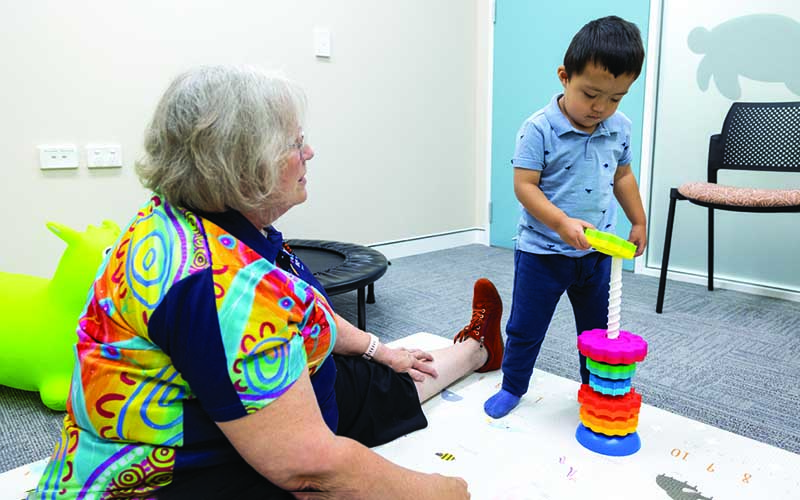
Discover how this family is benefitting from CliniKids' evidence-based therapies.
Eating disorders (EDs) are increasingly recognised among neurodivergent and transgender and gender diverse (TGD) individuals, yet most assessment and treatment models remain grounded in cisnormative and neuronormative assumptions and frameworks. Sensory processing, spanning interoception and exteroception, has been proposed as a potential factor that may help explain observed associations between neurodivergent traits, gender incongruence, and EDs.
The placebo effect is established in clinical trials, but for paediatric research, questions remain about how to best manage its influence. Within the autism field, data on these issues is sparse. This is particularly important in the oxytocin field where placebo responses are thought to play an important role. This study reports on data from the single-blind, placebo lead-in phase of a randomised controlled trial to investigate the placebo response and its relationship to treatment response in autistic children.
Maternal immune activation and prenatal maternal stress are well-studied risk factors for psychiatric conditions such as autism and schizophrenia. Animal studies have proposed the gut microbiome as a mechanism underlying this association and have found that risk factor-related gut microbiome alterations persist in the adult offspring.
There is a common mischaracterisation that autistic individuals have reduced or absent empathy. Measurement issues may have influenced existing findings on the relationships between autism and empathy, and the structure of the empathy construct in autism remains unclear.
Estimates of the prevalence of intellectual disability or autism spectrum disorder may vary depending on the methodology, geographical location, and sources of ascertainment. The National Disability Insurance Scheme in Australia was introduced progressively from 2016 to provide individualized funding for eligible people with a significant and permanent disability.
Aotearoa New Zealand does not provide publicly-funded intensive autism support. While parent-mediated supports are promising, children and families may also benefit from direct clinician support. We tested the efficacy of a low-intensity programme involving parent- and clinician-delivered support for autistic children.
This study aimed to identify guiding principles to underpin assessment and diagnosis of autism to improve the quality, consistency and accuracy of services provided to individuals and their families. An online survey and focus groups were used to capture community perspectives of members of the Australian autistic and autism communities.
Autistic children have an increased likelihood of anxiety, but more research is needed on the characteristics that predict various types of anxiety in this population.