
Search
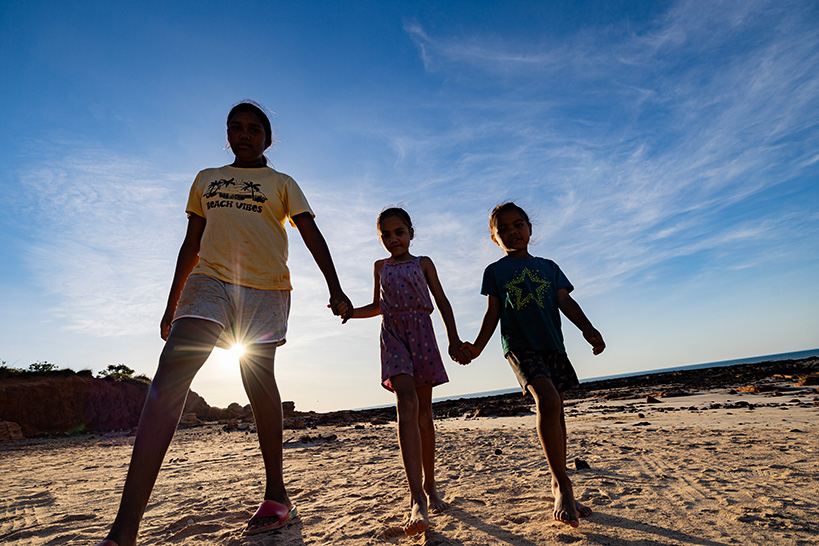
Aboriginal health is everyone's business. The needs of Aboriginal and Torres Strait Islander families and kids is integrated into all relevant areas of our work. Improving the health and wellbeing of Aboriginal and Torres Strait Islander kids and families is an overarching priority for every team at The Kids.
Quantifying the extent to which previous infections and vaccinations confer protection against future infection or disease outcomes is critical to managing the transmission and consequences of infectious diseases. We present a general statistical model for predicting the strength of protection conferred by different immunising exposures (numbers, types, and strains of both vaccines and infections), against multiple outcomes of interest, whilst accounting for immune waning.
Since its emergence in 1968, influenza A H3N2 has caused yearly epidemics in temperate regions. While infection confers immunity against antigenically similar strains, new antigenically distinct strains that evade existing immunity regularly emerge ('antigenic drift'). Immunity at the individual level is complex, depending on an individual's lifetime infection history.
Cases identified through mass testing represent only a fraction of infections, depending on the propensity of infected individuals to seek testing. Quantifying the variation in test-seeking behaviour through time or between population subgroups provides important information on testing uptake and supports epidemiological analyses of case data that may otherwise be biased.
Tools that can be used to collect behavioural data during pandemics are needed to inform policy and practice. The objective of this project was to develop the Your COVID-19 Risk tool in response to the global spread of COVID-19, aiming to promote health behaviour change. We developed an online resource based on key behavioural evidence-based risk factors related to contracting and spreading COVID-19. This tool allows for assessing risk and provides instant support to protect individuals from infection.
Arboviruses transmitted mainly by Aedes (Stegomyia) aegypti and Ae. albopictus, including dengue, chikungunya, and Zika viruses, and yellow fever virus in urban settings, pose an escalating global threat. Existing risk maps, often hampered by surveillance biases, may underestimate or misrepresent the true distribution of these diseases and do not incorporate epidemiological similarities despite shared vector species.
The relationship between ethnicity and mortality of patients critically ill with COVID-19 in Australia has not been described. Defining those communities at the highest risk of severe COVID-19 may assist with formulating effective public health policy and may improve the equitable delivery of health care in Australia.
To identify factors influencing the completion of a three-dose course of weekly intramuscular benzathine penicillin G injections by adults and adolescents with syphilis of unknown duration or late syphilis.
Avian influenza viruses (AIVs) pose a growing global health threat, particularly in low- and middle-income countries (LMICs), where limited surveillance capacity and under-resourced healthcare systems hinder timely detection and response. Migratory birds play a significant role in the transboundary spread of AIVs, yet data from key regions along migratory flyways remain sparse. To address these surveillance gaps, we conducted a study between December 2021 and February 2023 using fresh bird guano collected across 10 countries in the Global South.
Convalscent plasma (CP) was identified as a potential therapy for COVID-19 available early in the pandemic.