
Search

The Kids Research Institute Australia is proud to be a part of the Rare Care Comprehensive Centre (RCCC) for children with rare and undiagnosed disease, made possible thanks to one of Western Australia’s biggest philanthropic gifts.

Research that screens novel genetic variants identified in disease will be fast-tracked by a funding boost, offering new hope of an early diagnosis for families of children with a rare or undiagnosed genetic disease.
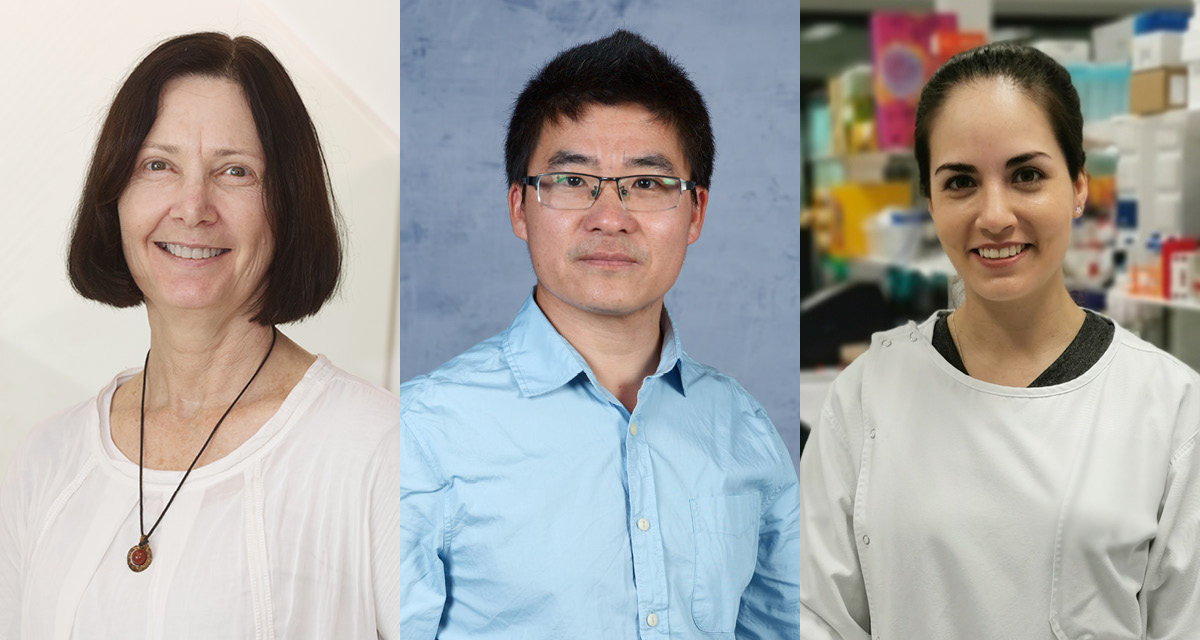
One of the researchers who helped crack the code of 10-year-old Northam girl Charlotte Patterson’s incredibly rare disease has received State Government funding that will allow her to use the same methods to rapidly assess the cases of hundreds more patients living with undiagnosed disease.
The prevalence of taeniasis in Thailand has decreased over the past six decades. However, it remains a public health concern, particularly in focal areas, especially along the border regions where migration between Thailand and neighboring endemic countries is frequent. Spatial distribution analysis provides a useful method for identifying high-risk areas and implementing targeted integrated control measures. This study aimed to examine the spatial patterns of taeniasis in 2008 and 2014, along with their associated One Health risk factors at the sub-district level.
Rare diseases (RD) are conditions affecting fewer than 1 in 2000 persons, with over 7000 largely genetic RDs affecting 3.5 %-5.9 % of the global population, or approximately 262.9–446.2 million people. The substantial healthcare burden and costs, such as the $1 trillion annual expense in the USA, highlight the urgent need for improved RD management. The International Rare Diseases Research Consortium (IRDiRC) addresses this need through global collaboration, aiming for timely and accurate diagnosis, development of 1000 new therapies, and methodologies to measure impact by 2027.
Citation: MacDonald B, Burmaz M, Baker S, et al. TrialR: critical enablers and the need for reusable Rare Disease Clinical Trial infrastructure in
There is a greater prevalence of multiple sclerosis (MS), a neurological autoimmune condition, in populations living further from the equator, hypothesised to be due to reduced sunlight exposure. There exists a proven sunlight surrogate therapy for dermatological inflammatory conditions, in the form of narrowband NB-UVB phototherapy. Yet, there is a paucity of randomized trials of the therapeutic delivery of NB-UVB beyond dermatology for conditions with a systemic inflammatory component.