
Search
Showing results for "A"
Pneumococcal disease (PD) remains a major health concern globally. In children, pneumococcal conjugate vaccines (PCVs) provide protection against PD from most vaccine serotypes, but non-vaccine serotypes contribute to residual disease. V114 is a 15-valent PCV containing all 13 serotypes in Prevnar 13™ and public health important serotypes 22F and 33F. This phase 3 study evaluated safety and immunogenicity of mixed PCV13/V114 regimens using a 3 + 1 dosing schedule when changing from PCV13 to V114 at doses 2, 3, or 4.
Despite widespread use of pneumococcal conjugate vaccines (PCVs) in children, morbidity and mortality caused by pneumococcal disease (PD) remain high. In addition, many children do not complete their PCV course on schedule. V114 is a 15-valent PCV that contains two epidemiologically important serotypes, 22F and 33F, in addition to the 13 serotypes present in PCV13, the licensed 13-valent PCV.
Peri-prosthetic joint infection (PJI) is a devastating complication of joint replacement surgery. Determining the optimal duration of intravenous (IV) antibiotics for PJI managed with debridement and implant retention (DAIR) is a research priority.
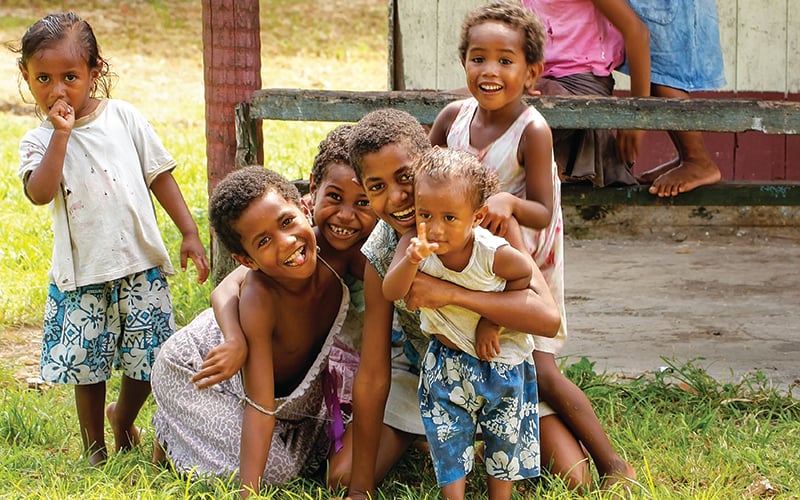
Children in the tiny Pacific nation of Tuvalu face a unique threat that should be a wake-up call to other countries across the world.
Scabies is an important predisposing factor of impetigo which can lead to serious bacterial complications. Ivermectin-based mass drug administration can substantially reduce scabies and impetigo prevalence in endemic settings, but the impact on serious bacterial complications is not known.
Substance use is a public health issue with a greater burden in rural areas. Barriers to accessing services are exacerbated for rural substance users, with confidentiality concerns, longer travel distances, workforce issues and limited availability of services. This paper presents results from a study exploring substance users' experiences of accessing services in Western Australia's South West.
The Environmental Determinants of Islet Autoimmunity (ENDIA) study is an Australia-wide pregnancy-birth cohort study following children who have a first-degree relative with type 1 diabetes (ACTRN1261300794707). A dedicated ENDIA Facebook page was established in 2013 with the aim of enhancing recruitment and supporting participant retention through dissemination of study information.
Burn injuries are traumatic experiences that can detrimentally impact an individual’s psychological and emotional wellbeing. Despite this, some survivors adapt to psychosocial challenges better than others despite similar characteristics relating to the burn.
ATP Binding Cassette Subfamily A Member 3 (ABCA-3) is a lipid transporter protein highly expressed in type-II alveolar (AT-II) cells. Mutations in ABCA3 can result in severe respiratory disease in infants and children. To study ABCA-3 deficiency in vitro, primary AT-II cells would be the cell culture of choice although sample accessibility is limited. Our aim was to investigate the suitability of primary nasal epithelial cells, as a surrogate culture model for AT-II cells, to study ABCA-3 deficiency.
To understand the prevalence of children and adolescents’ electronic device use (EDU) in the hour before bed and identify sociodemographic groups that are at increased risk of problematic use.