
Search
Children who are Deaf and Hard of Hearing, their parents, Teachers of the Deaf, and other community stakeholders were involved in co-designing a web-based resource to support students' social-emotional well-being.
To investigate the long-term impact of recurrent otitis media (rOM) and ventilation tube insertion (VTI) in early childhood on hearing outcomes and middle-ear health three to five years later, in a prospective pregnancy cohort study.

Honorary Emeritus Fellow

Program Manager

News you can use - Travelling with an ear infection
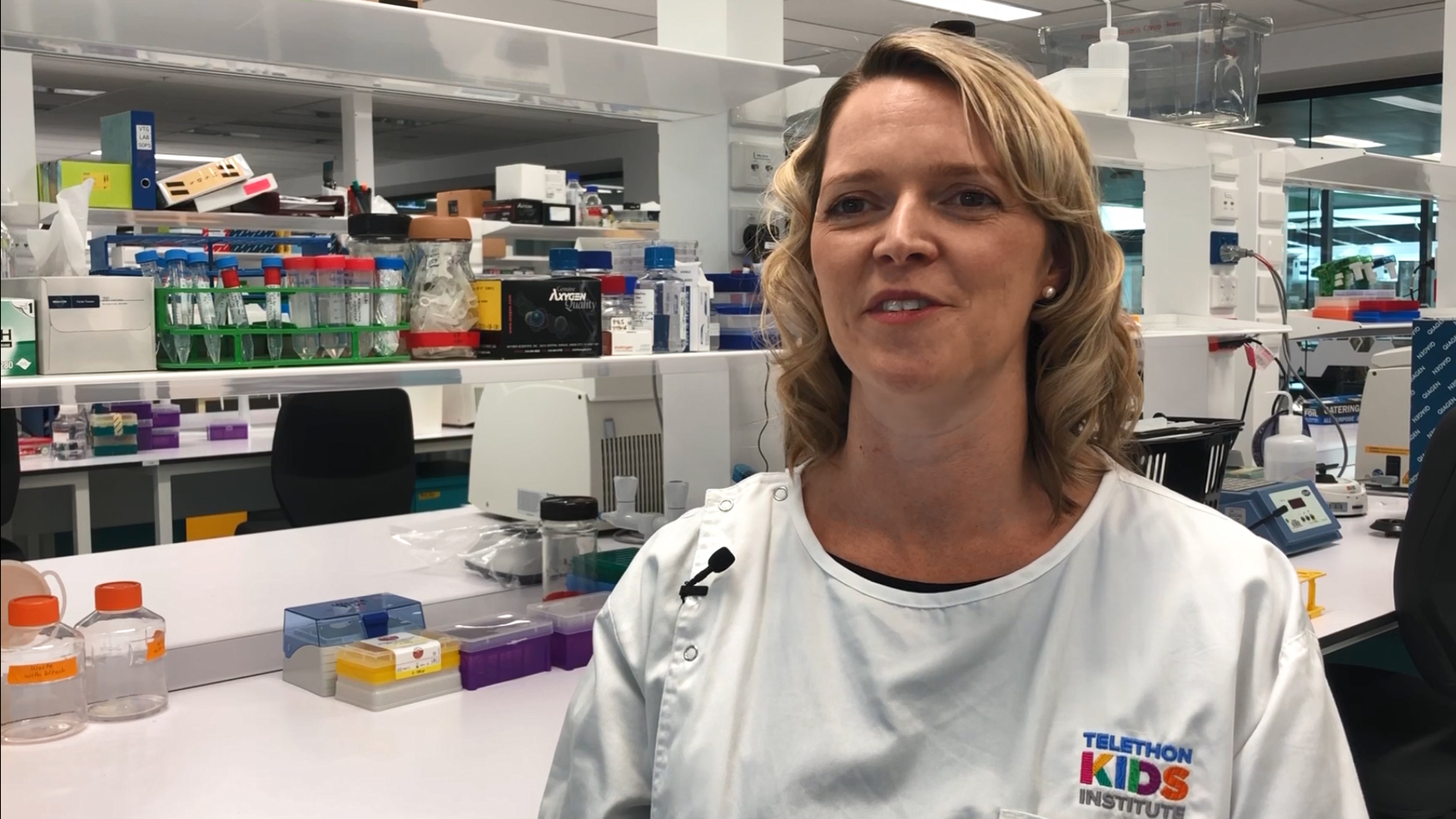
A nasal spray that could potentially prevent childhood ear infections and reduce antibiotic use is a step closer to clinical trials thanks to a $500,000 CUREator grant.

The Deborah Lehmann Research Award in Paediatric Infectious Disease Research is a funding mechanism to support the training and development of early- to mid-career researchers (EMCR) or Higher Degree by Research (HDR) students who are nationals from the Pacific Region working in or outside their hom
The Kids's Dr Ruth Thornton is one of 12 finalists in the annual national Fresh Science competition with her research into middle-ear infections.
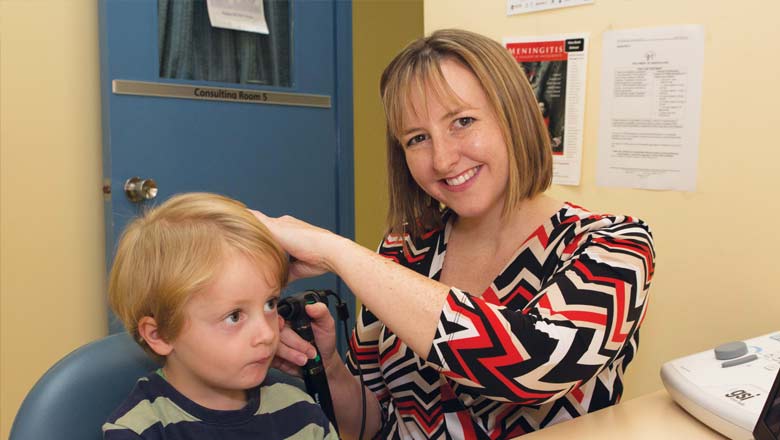
The Kids is investigating whether a cystic fibrosis medication may be the answer to ear infections, reducing the need for antibiotics and surgery.
The Kids Research Institute Australia researchers have found close to 40 per cent of Aboriginal babies begin to develop middle ear infections between two and four months of age in a first of its kind study in metropolitan Perth.