
Search
Showing results for "A"
The aim of this study was to assess whether in utero tobacco smoke exposure alone affects early-life lung growth and development. Pregnant BALB/c mice...
Chronic, low-intensity air pollution exposure has been consistently associated with reduced lung function throughout childhood. However, there is limited research regarding the implications of acute, high-intensity air pollution exposure. We aimed to determine whether there were any associations between early life exposure to such an episode and lung growth trajectories.
Individual-based models of infectious disease dynamics commonly use network structures to represent human interactions. Network structures can vary in complexity, from single-layered with homogeneous mixing to multi-layered with clustering and layer-specific contact weights. Here we assessed policy-relevant consequences of network choice by simulating different network structures within an established individual-based model of SARS-CoV-2 dynamics.

MEDIA ENQUIRIES Mailing list Discover. Prevent. Cure. Media Contacts Be Inspired About The Kids Please direct general enquiries to our reception on (
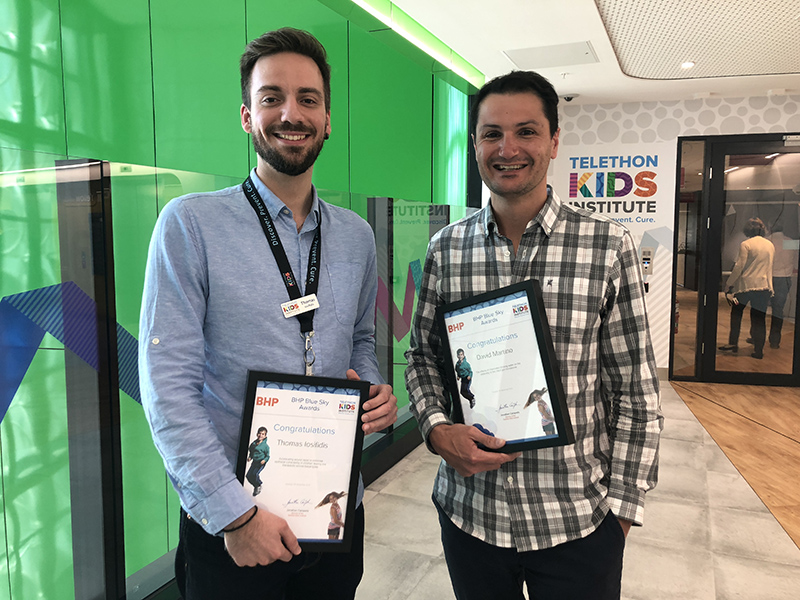
Two The Kids researchers will launch innovative new scientific projects thanks to funding from BHP.
An acute bout of sprint interval training (SIT) performed with psychological need-support incorporating autonomy, competence, and relatedness has been shown to attenuate energy intake at the post-exercise meal, but the long-term effects are not known. The aim of this trial was to investigate the effects of 12 weeks of SIT combined with need-support on post-exercise food consumption.
Human movement drives spatial transmission patterns of infectious diseases. Population-level mobility patterns are often quantified using aggregated data sets, such as census migration surveys or mobile phone data. These data are often unable to quantify individual-level travel patterns and lack the information needed to discern how mobility varies by demographic groups. Individual-level datasets can capture additional, more precise, aspects of mobility that may impact disease risk or transmission patterns and determine how mobility differs across cohorts; however, these data are rare, particularly in locations such as sub-Saharan Africa.
Older adults are significantly less likely than their younger counterparts to engage in physical activity. Comprehensive policies to support healthy ageing thus need to include components encouraging greater participation in physical activity in later life. This study tested potential messages for use in health communication campaigns aimed at increasing physical activity among older adults.
T-cell activation induces context-specific gene expression programs that promote energy generation and biosynthesis, progression through the cell cycle and ultimately cell differentiation. The aim of this study was to apply the omni ATAC-seq method to characterize the landscape of chromatin changes induced by T-cell activation in mature naïve CD4+ T-cells.
Parents must rapidly adapt goals from various aspects of their lives to accommodate the demands of the early stages of parenthood. According to the self-concordance model, having autonomous goal motives (based on enjoyment or personal goal value) should foster effective self-regulation (e.g., coping strategies), better goal management, and increase the likelihood of goal attainment, compared to controlled motives (goals driven by demands/pressures).