
Search
Showing results for "A"
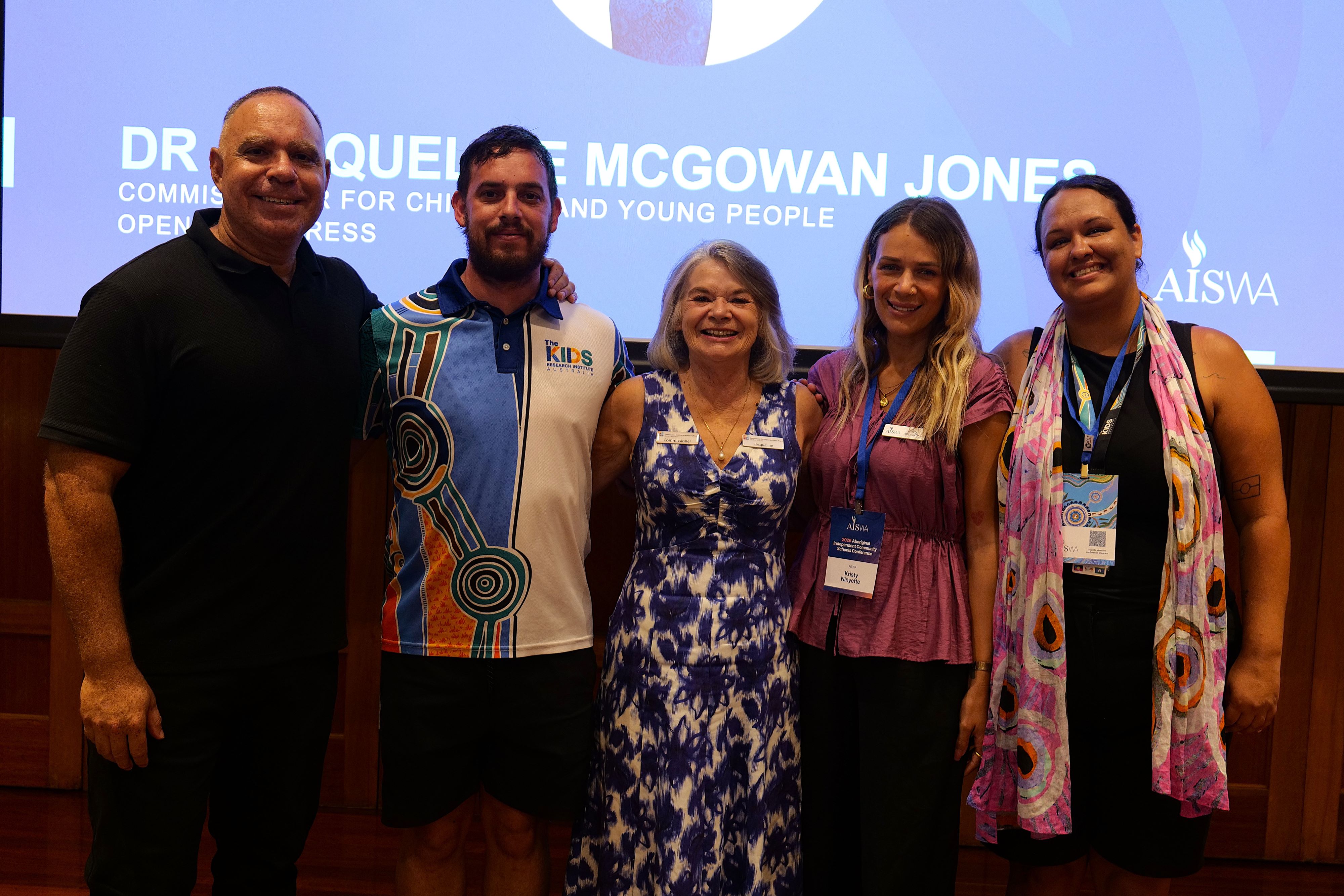
Embrace and Healing Kids, Healing Families have shared findings from their cultural safety research with independent school staff from across WA and the NT.
The discoveries that have set our research apart primarily relate to the factors early in life that cause life-long respiratory problems.
This study aims to show that asthma and allergies in individuals can be predicted before it occurs based on individual family history and information on the early environment.
Otitis media (OM), middle ear infection, represents a significant burden on children, their families, and the healthcare system. OM is the major cause of hearing loss in children and if left untreated in children who suffer chronic and recurrent forms of OM, this disease can have serious life-long sequelae.
Adolescents are heavily exposed to unhealthy outdoor food advertisements near schools, however, the marketing power of these advertisements among adolescents has not yet been explored. This study aimed to investigate the teen-directed marketing features present and quantify the overall marketing power of outdoor food advertisements located near schools to explore any differences by content (ie, alcohol, discretionary, core and miscellaneous foods) school type (ie, primary, secondary, K-12) and area-level socio-economic status (SES; ie, low vs high).
In 2019, the Murdoch Children's Research Institute in partnership with the Fiji Ministry of Health and Medical Services carried out an integrated mass drug administration (MDA) for the treatment of scabies and lymphatic filariasis in the Northern Division of Fiji. We conducted a retrospective micro-costing exercise focused on the cost of scabies control in order to inform budgeting and policy decision making in an endemic setting.
Central nervous system germinomas are treatment-sensitive tumors with excellent survival outcomes. Current treatment strategies combine chemotherapy with radiotherapy (RT) in order to reduce the field and dose of RT. Germinomas originating in the basal ganglia/thalamus have proven challenging to treat given their rarity and poorly defined imaging characteristics. Craniospinal, whole brain, whole ventricle, and focal RT have all been utilized; however, the best treatment strategy remains unclear.
In addition to providing pathogen-specific immunity, vaccines can also confer nonspecific effects (NSEs) on mortality and morbidity unrelated to the targeted disease. Immunisation with live vaccines, such as the BCG vaccine, has generally been associated with significantly reduced all-cause infant mortality. In contrast, some inactivated vaccines, such as the diphtheria, tetanus, whole-cell pertussis (DTPw) vaccine, have been controversially associated with increased all-cause mortality especially in female infants in high-mortality settings.
Across 6 years of school, multiple risk-exposed children lagged behind low risk-exposed children in the order of years of lost gains in reading achievement
Direct and indirect effects on pneumococcal carriage post-PCV10 are likely to result in reductions in pneumococcal disease, including in infants too young to be vaccinated