
Search
Showing results for "A"

One of the best ways you can help your friends and others in your school to be safe online is by developing your own online knowledge and skills. It
Please note that both the Subiaco and Joondalup clinics will shut down for the Christmas and New Year period from Friday, December 23, through to Wednesday, January 4, inclusive. The clinics will re-open on Thursday, January 5, 2023.
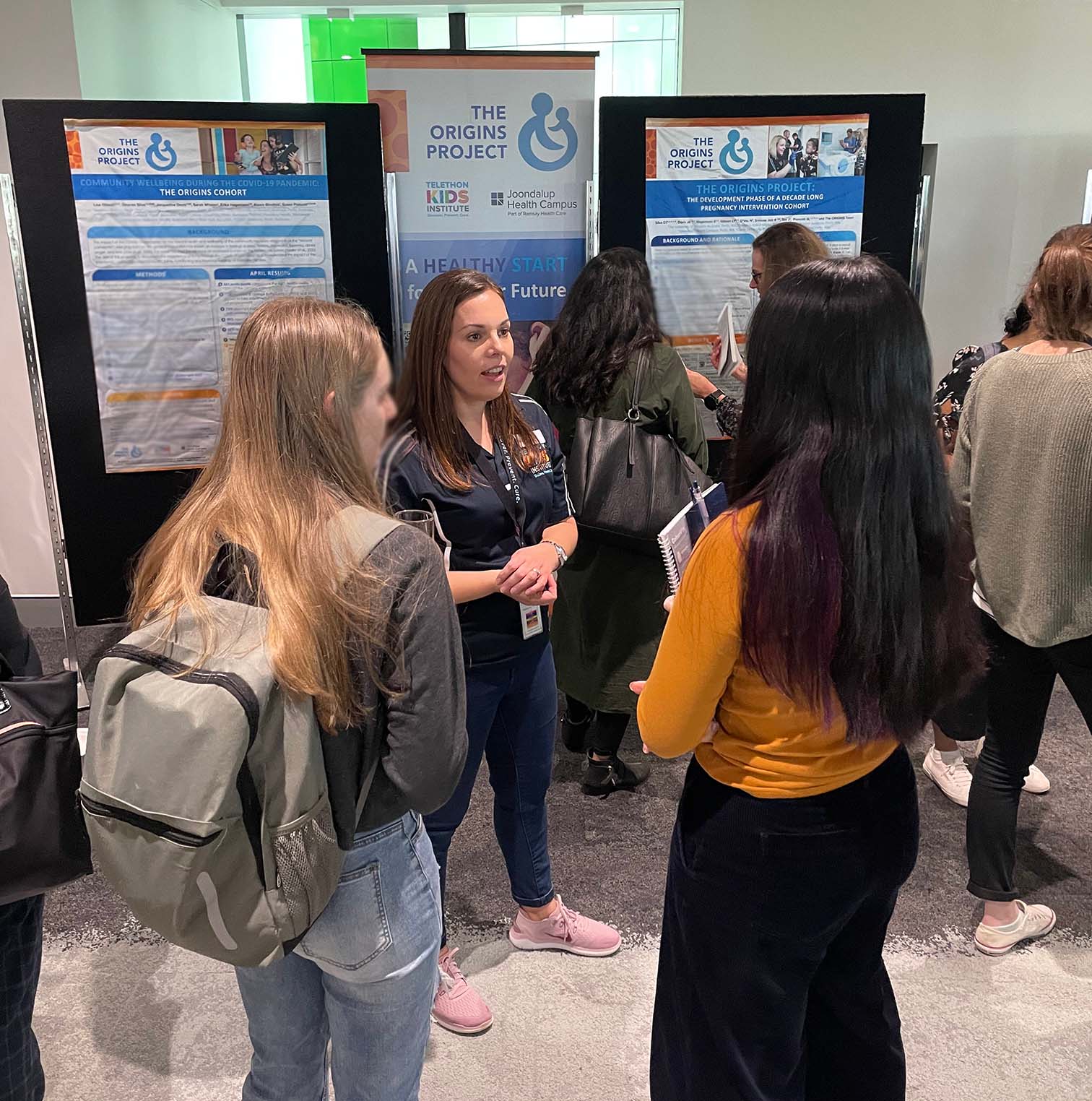
Students met ORIGINS team at the recent Prospective Student Evening at Telethon Kids Institute.

This sub-project will be using ORIGINS data to explore the risk and protective factors of obesity from birth to early childhood.
The Kids Research Institute Australia is looking for healthy babies (born from 35 weeks of pregnancy onwards) to take part in an important study evaluating a new medication that may help prevent Respiratory Syncytial Virus (RSV) disease.
Update on pneumococcal and meningococcal vaccine research
At The Kids Research Institute Australia, we've been thinking of the kids for 35 years. We are finding the answers to some of the biggest problems facing the health and wellbeing of children and families. Our Research Themes host defined programs of work where the Institute has clear strengths and capacity. Our overarching commitment to First Nations Health and Equity is embedded across all our work and features as a core consideration in each Research Theme. The Institute is committed to ending the disparity in health and wellbeing outcomes between Aboriginal and non-Aboriginal kids and families.
Multiple sclerosis (MS) is an immune-mediated inflammatory disease of the central nervous system that results in demyelination of axons, inefficient signal transmission and reduced muscular mobility. Recent findings suggest that B cells play a significant role in disease development and pathology. To further explore this, B cell profiles in peripheral blood from 28 treatment-naive patients with early MS were assessed using flow cytometry and compared to 17 healthy controls.
The Australian guidelines to reduce health risks from drinking alcohol were released in 2020 by the National Health and Medical Research Council. Based on the latest evidence, the guidelines provide advice on how to keep the risk of harm from alcohol low.
Excess mortality is an important measure of the scale of the coronavirus-2019 pandemic. It includes both deaths caused directly by the pandemic, and deaths caused by the unintended consequences of containment such as delays to accessing care or postponements of healthcare provision in the population.