
Search
The majority of Australian Aboriginal and Torres Strait Islander (hereafter referred to as “Aboriginal”) people live in urban centres. Otitis media (OM) occurs at a younger age, prevalence is higher and hearing loss and other serious complications are more common in Aboriginal than non-Aboriginal children. Despite this, data on the burden of OM and hearing loss in urban Aboriginal children are limited.
Chronic suppurative otitis media (CSOM), sometimes referred to as chronic otitis media (COM), is a chronic inflammation and often polymicrobial infection (involving more than one micro-organism) of the middle ear and mastoid cavity, characterised by ear discharge (otorrhoea) through a perforated tympanic membrane.
Reflections and perceptions of chronic tinnitus during childhood
Advances in understanding bacterial dynamics in the upper airway microbiome are driving development of microbiota-modifying therapies to prevent or treat disease
There is insufficient evidence available to determine whether these organisms are pathogens, commensals or contribute indirectly to the pathogenesis of OM
The effectiveness and safety profile of antiseptics in the treatment of chronic suppurative otitis media is uncertain

Honorary Emeritus Fellow

Program Manager

A The Kids Research Institute Australia ear health researcher has received a prestigious national fellowship to support her search for new therapies to improve the lives of kids who suffer repeat middle ear infections.
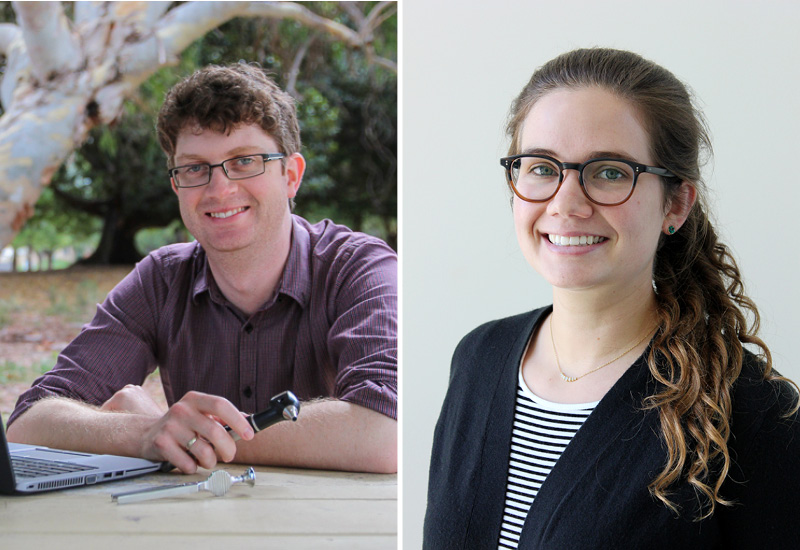
Two The Kids Research Institute Australia researchers have been named as finalists in the 2020 Western Australian Premier’s Science Awards.