What is influenza?
Influenza is a common virus that affects the respiratory system. The flu virus tends to be seasonal (peaking during winter) and is spread through the air when someone coughs or sneezes. You can also catch it from touching a contaminated surface and then touching your mouth, eyes or nose, so practising good hygiene habits, such as washing your hands, is advised.
More severe than a common cold, typical symptoms include fever, chills, headache, sore throat, runny nose, cough, body aches, loss of appetite, and sometimes vomiting and diarrhoea.
Western Australia experienced a record-breaking influenza season in 2025, with data demonstrating there were 36,621 flu cases state-wide, far surpassing the previous record of 23,248 infections in 2019.
Can the flu have any serious complications?
Flu complications can include:
- Croup
- Bronchitis
- Middle ear infections
- Convulsions
- Pneumonia
- Heart failure
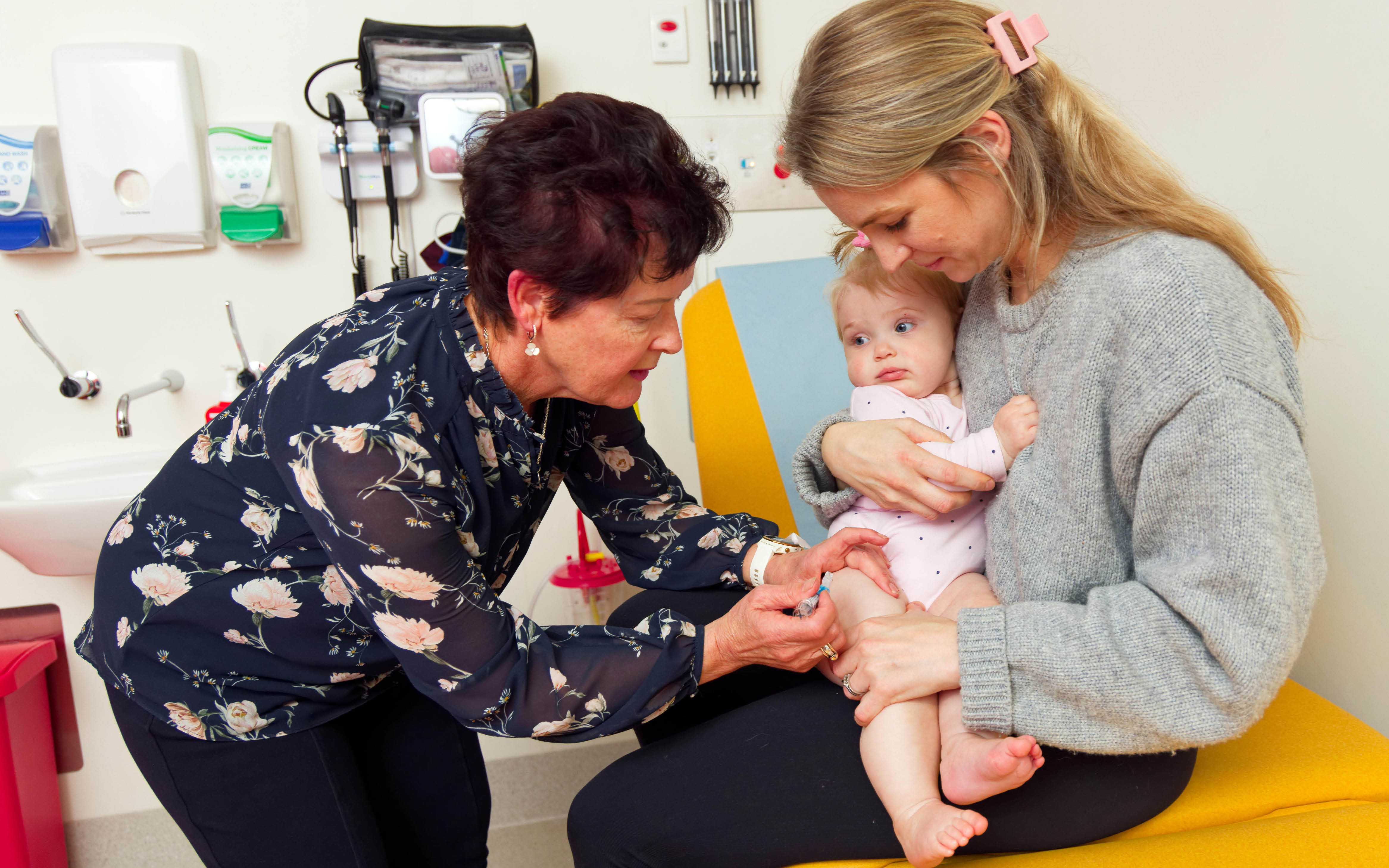
Young children are particularly vulnerable to influenza and one of the age groups most likely to end up in hospital with serious complications. Most childhood flu-related hospitalisations and deaths occur among children without underlying medical conditions, so all children should receive vital protection against flu.
For more information about the flu, visit the WA Department of Health.
*Usually someone with influenza will recover naturally within two to seven days. You should consult a doctor if symptoms become severe or don’t clear up.
How can the flu be prevented?
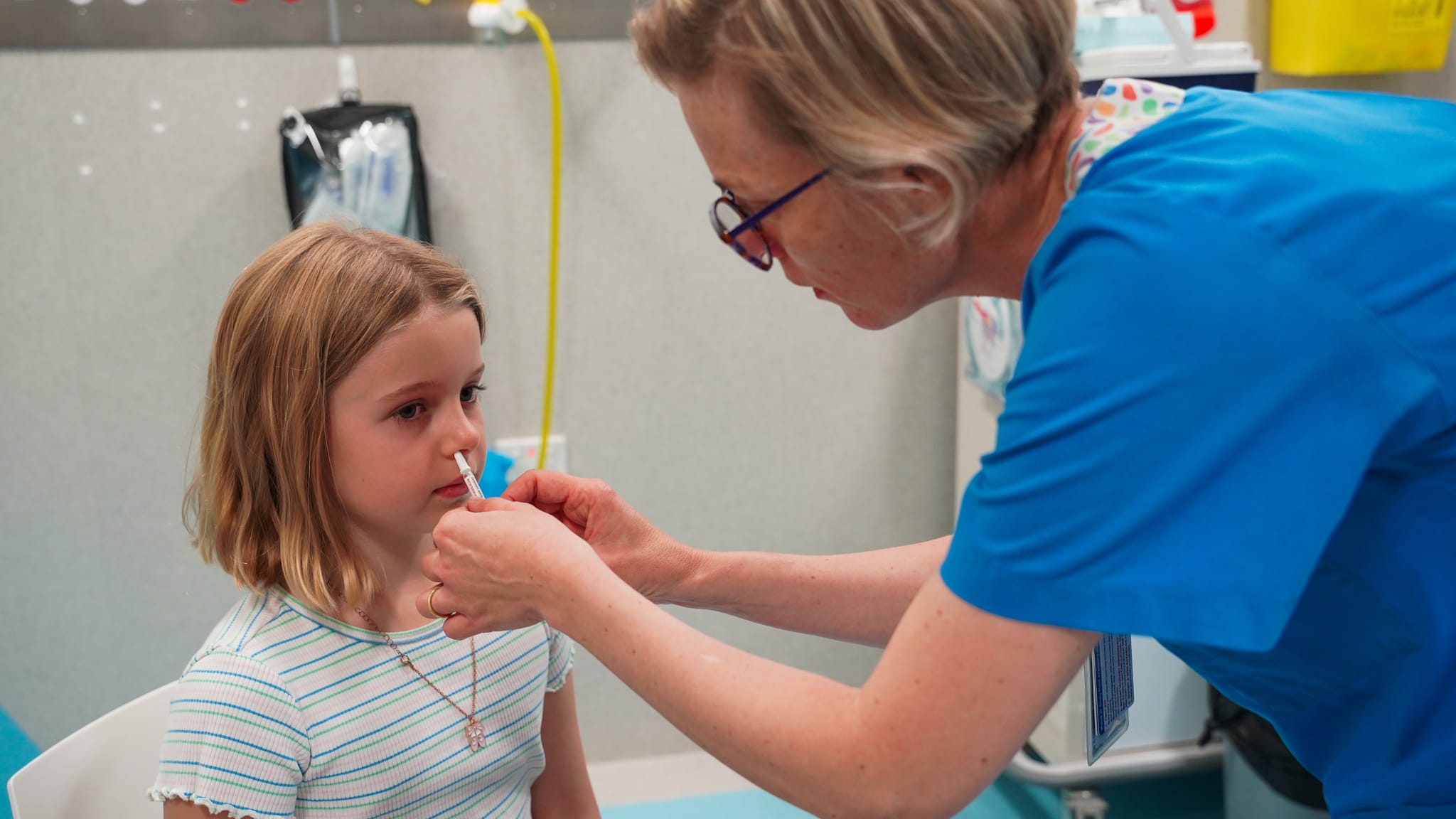
The best way to avoid catching the flu is to be vaccinated each year. This winter we hope to see a dramatic rise in the number of children receiving protection against influenza this winter thanks to the introduction of an Australian-first intra-nasal vaccine for kids aged two to 17 years old.
Professor Chris Blyth, Head of the Wesfarmers Centre of Vaccines and Infectious Diseases at The Kids, said the FluMist nasal spray provides the same level of protection as the traditional flu injection.
“FluMist has been used successfully in vaccination programs across the northern hemisphere for more than a decade, so it’s incredibly rewarding to see our 10-year campaign to bring it to Australia finally realised,” Professor Blyth said.
Western Australia’s nasal vaccine program boasts the broadest eligibility nation-wide, with Queensland, New South Wales, and South Australia the only other states providing the nasal vaccine for children from two to five years.